Every circular economy conference I've sat in Accra, Kigali, on Zoom during COP side events opens with roughly the same slide: a diagram of arrows looping back into a circle, product design at the top, "regeneration" at the bottom, a clean visual promising that nothing needs to be wasted. It's a good framework. The Ellen MacArthur Foundation, which has done more than any single institution to popularise the concept, defines it around three principles: eliminate waste and pollution, circulate products and materials at their highest value, and regenerate nature.[1] I believe in all three.
But every time I've tried to apply that diagram to a Ghanaian city, it breaks in the same place: the arrows assume a formal collection and recycling system that, for most of urban Africa, simply isn't there yet. What exists instead often invisible in the policy conversation is an enormous, largely informal network of waste pickers, "borla" truck operators, scrap dealers and small recyclers who are already doing real circularity work every single day, without funding, recognition, or safety nets.
The scale problem nobody likes to lead with
The World Bank's What a Waste 2.0 report one of the most cited waste datasets globally projects that municipal solid waste generation in Sub-Saharan Africa will nearly triple by 2050, growing from roughly 174 million tonnes a year to around 516 million tonnes, driven largely by urbanisation and population growth.[2] UNEP's Africa Waste Management Outlook adds the harder truth: across much of the continent, the waste that is collected overwhelmingly ends up in open dumpsites rather than engineered landfills or recycling facilities, and a large share is never formally collected at all.[3]
~3x
Projected growth in Sub-Saharan Africa's annual municipal waste generation between 2016 and 2050
Source: World Bank, What a Waste 2.0 (2018)
10,000+
Metric tonnes of solid waste the Waste Gobbler project intercepts annually from the Korle Lagoon, Accra
Source: SWK Ghana / Waste Gobbler project data
Read those two numbers together and the picture is clear: the volume problem is growing faster than the formal infrastructure to handle it. That gap is exactly where Ghana's informal waste sector already operates, and where I've spent the last few years building.
What building Taka Kipawa taught me about designing for the sector we have
In 2024, during the GROW Program run by MEST Africa, Generation Ghana and the Mastercard Foundation, I built the SWK Taka Kipawa App "Taka Kipawa" means waste is a gift in Swahili a digital waste management and upcycling marketplace now piloting in Ga West, Ghana. It connects households, independent waste contractors, and recyclers, with smart collection scheduling, a circular-economy marketplace for reusable materials, and an educational sustainability hub.
The single biggest lesson from that build wasn't technical. It was this: if you design a waste-tech platform assuming you're introducing collection and sorting to a market that has none, you will build the wrong product. Ghana already has collection and sorting it's informal, undercapitalised, and largely undocumented, but it exists, and it moves real tonnage every day. The job of good GreenTech isn't to replace that network with an app. It's to give it the scheduling, visibility, and market access it has never had.
Digitising trust and logistics for the people already doing the work matters more than digitising the transaction itself.
That reframing changed almost every design decision in Taka Kipawa from how collection routes are scheduled to how the marketplace prices upcycled materials to reflect what local waste contractors, not outside investors, consider fair value.
The Waste Gobbler: interception is a symptom, not a cure
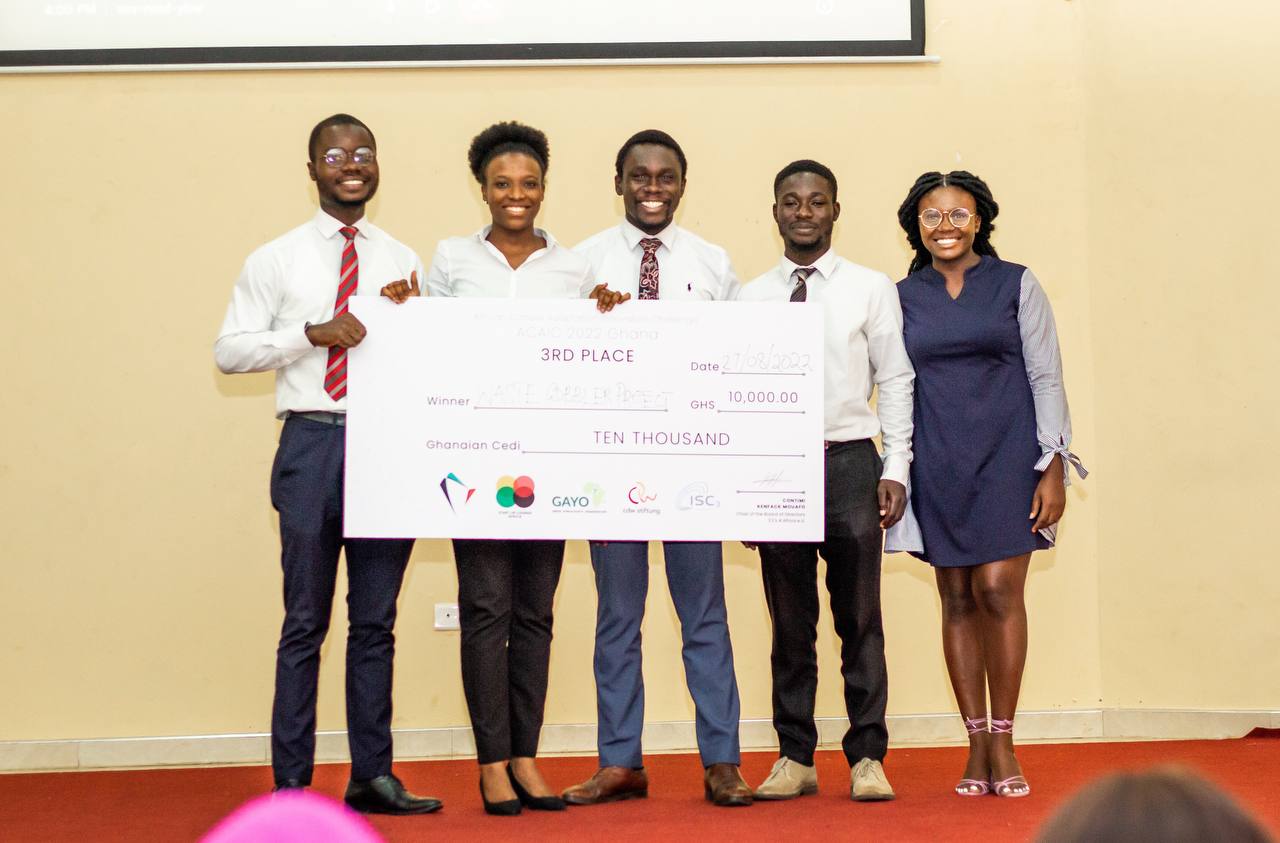
The Waste Gobbler project, which won 2nd runner-up and seed funding at the African Climate Adaptation and Innovation Challenge (ACAIC) in 2022, is a solar-powered ocean waste interception system stationed on Accra's Korle Lagoon. It retrieves more than 10,000 metric tonnes of municipal solid waste a year before it reaches the Atlantic.
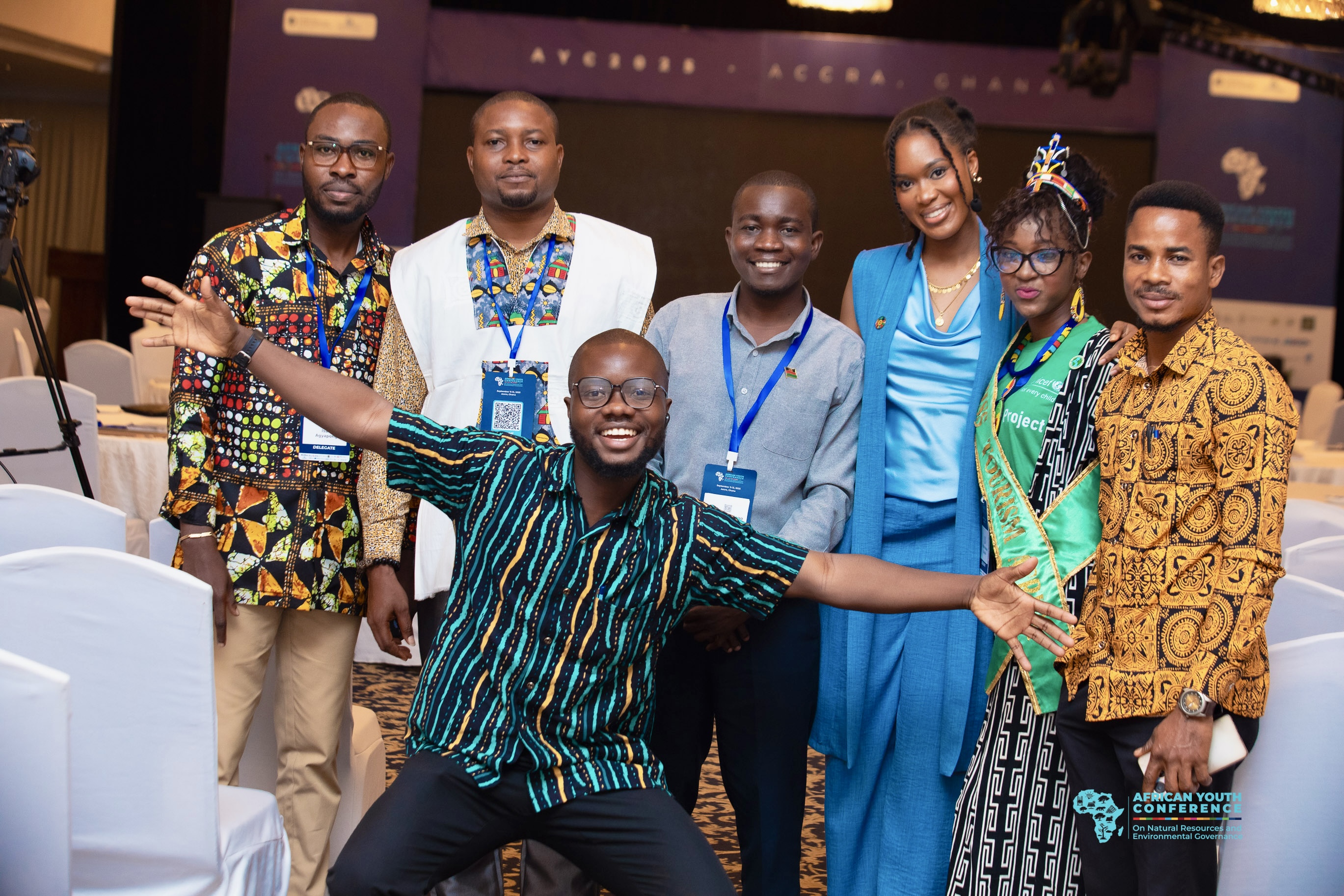
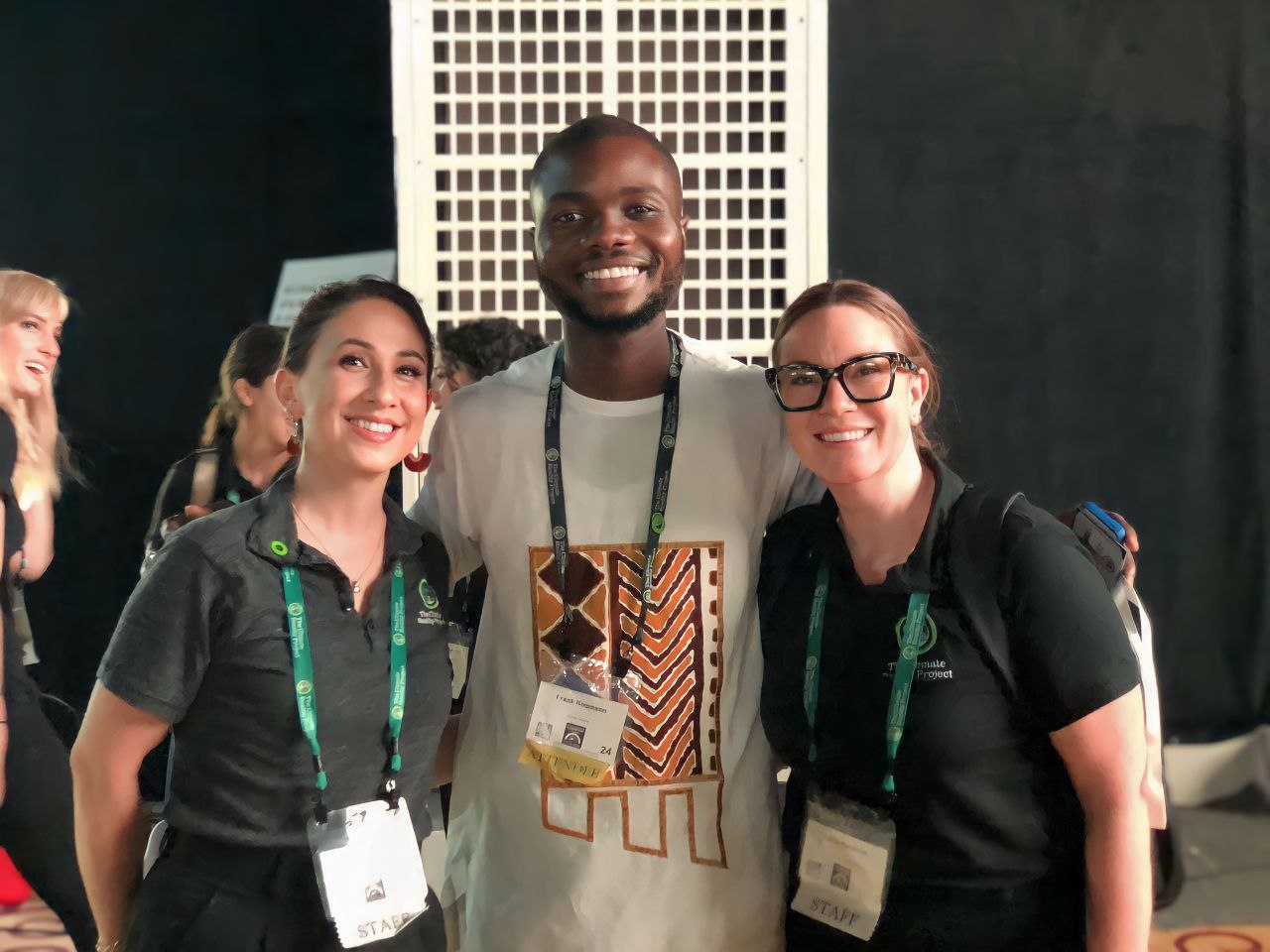
Presenting on circular economy and waste innovation at an international sustainability forum.
It's a project I'm proud of, and it's necessary. But interception technology, however well engineered, is downstream triage. It catches what upstream systems failed to divert. Every conversation I've had with funders and policymakers about scaling ocean-waste interception eventually arrives at the same conclusion I keep arriving at with Taka Kipawa: the real leverage point is upstream, in the informal collection economy, long before waste ever reaches a lagoon.
What would actually move the needle
None of this is an argument against tech-forward climate innovation quite the opposite. It's an argument for pointing that innovation at the right layer of the system. From building both of these projects, four things stand out as what Ghana and much of Sub-Saharan Africa actually needs:
- Formal recognition of informal waste workers integrating waste pickers, "borla" truck operators, and scrap dealers into municipal systems, with IDs, safety equipment, and fair-price protections, rather than displacing them.
- Extended Producer Responsibility (EPR) policy built for the informal chain so that packaging and plastics levies actually fund the collectors doing the recovery work, not just a formal recycling facility that may not exist locally yet.
- Blended, patient financing for youth-led GreenTech ventures grant-plus-equity structures that can absorb the slow, trust-building pilot phase that platforms like Taka Kipawa require before they can scale.
- Digital tools co-designed with waste workers, not just for them the difference between an app that gets adopted and one that gets abandoned after the pilot photo-op ends.
SWK Ghana's vision is to scale this model circular economy tools built around the informal sector rather than in spite of it across Africa by 2035. That's a long runway, and Taka Kipawa piloting in one district of Ga West is a small first step on it. But the direction is the part I'm confident about: Africa's circular economy will be built by the people already doing the work, or it won't really be circular at all.
See Taka Kipawa and the Waste Gobbler project in detailFull case studies, live demos, and the story behind SWK Ghana's GreenTech work are on my Solutions page.
View Solutions
If you're an NGO or a green venture that needs a website which actually explains your circular economy work clearly instead of burying it in jargon, that's precisely the kind of build KoomBei, the web services company I founded, exists for.