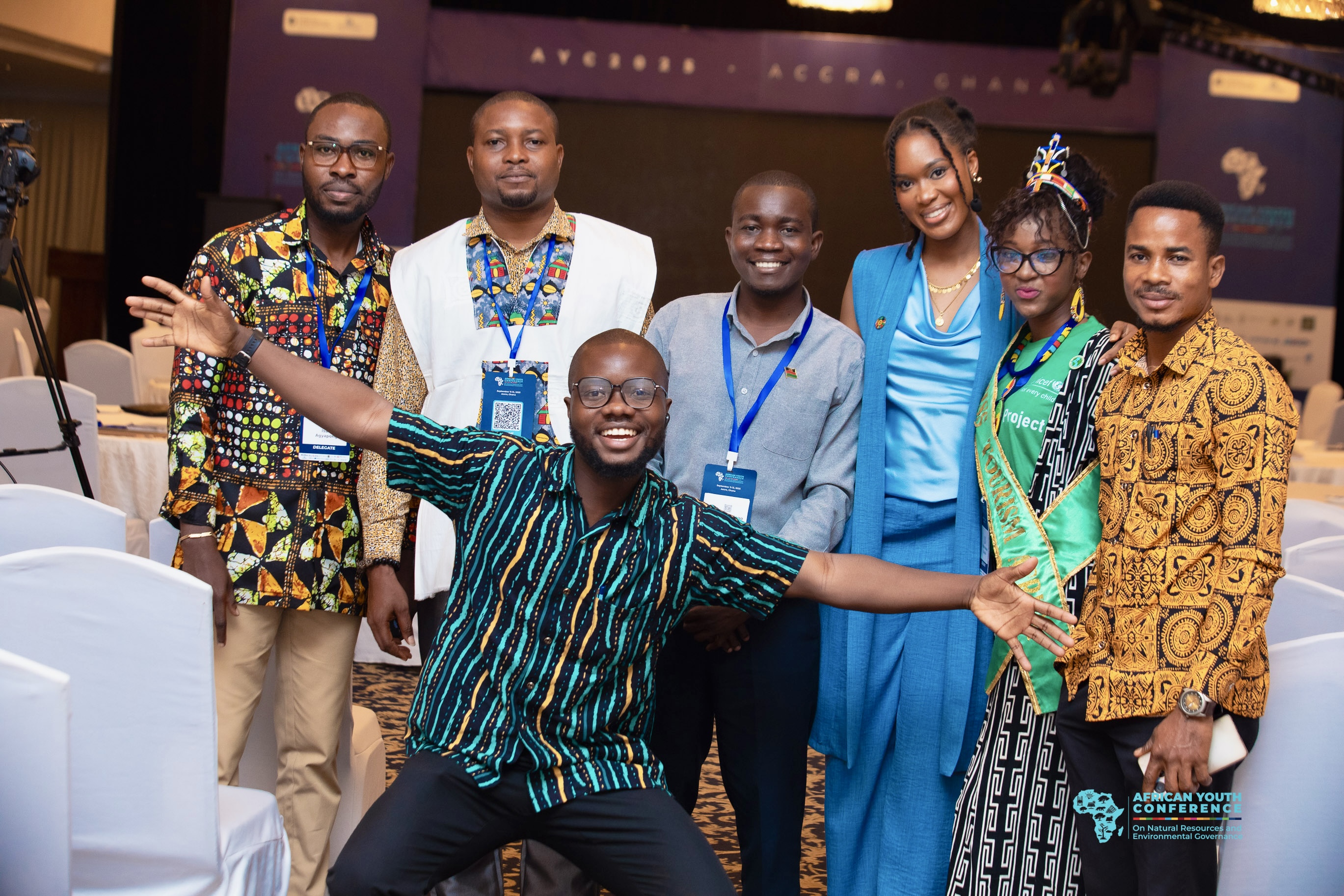
As Global Operations Associate at The HuD Group, part of my role is coordinating meetings and operations across a network of 27 Country CEOs spread across as many countries. Not one of them is my direct report. Each leads their own national chapter, answers to their own local structure, and could, in a practical sense, simply stop responding to me tomorrow with no formal consequence. Coordination across that network happens anyway, every week, but it happens because people choose to show up, not because an org chart says they must.
That's a very different leadership problem from the one most leadership training assumes. Most of it hierarchical management, performance reviews, escalation paths is built for a world where you can eventually compel compliance. Federated networks, volunteer-driven organisations, and most youth-led NGOs across Africa (SWK Ghana included) don't work that way. Neither does client work at KoomBei, where every organisation I build a website for could walk away at any point. Influence has to be earned continuously, not assumed once.
The org chart lies about where leadership actually happens
Formal authority the ability to hire, fire, or evaluate is a leadership shortcut. It lets you skip the harder work of earning cooperation, because people show up whether they're persuaded or not. Take that shortcut away, and you find out fairly quickly whether you actually know how to lead, or whether you were just borrowing a title's weight.
Coordinating 27 Country CEOs forced me to relearn leadership from that harder starting point. The management theorist Robert K. Greenleaf, in his foundational 1970 essay The Servant as Leader, framed this as leading by serving first removing obstacles, providing clarity, and making the people you're coordinating more capable, rather than issuing directives from above.[1] It's not a soft idea. In a network where everyone has an exit option, it's closer to the only idea that actually works.
27
Country CEOs I coordinate operations with at The HuD Group none of whom report to me formally
Source: The HuD Group Global
0
Formal reporting lines between my role and those Country CEOs the coordination runs entirely on trust and clarity
Source: personal role description
What actually gets 27 independent leaders to move together
A few practices, learned mostly by getting them wrong first:
- Over-communicate the "why," not just the "what." A direct report will often act on an instruction alone. A peer leader who can simply opt out needs to understand why the ask matters to their own chapter before they'll prioritise it over their local list.
- Make every ask smaller and more specific than feels necessary. Vague asks to people with no obligation to you get quietly deprioritised. Precise, bounded asks get done.
- Protect their time like it's scarcer than yours. It usually is every Country CEO in that network is already running their own chapter. Coordination that respects that constraint earns more goodwill than coordination that ignores it.
- Make participation visible. Recognition is often the only currency available when salary and hierarchy aren't tools you have. Naming who did what, publicly, does real work.
Authority you don't have on paper, you earn through consistency and it can be withdrawn just as easily as it was given.
What Harvard's Aspire Leaders Program reinforced
In 2025, I completed the Aspire Leaders Program run by the Aspire Institute at Harvard Business School, a cohort-based program for emerging leaders from across the Global South. A lot of it validated what the HuD Group role had already taught me the hard way: that leadership in resource-constrained, high-autonomy environments is less about command and more about building enough trust that people extend you discretion voluntarily.
Building leadership capacity alongside technical skills has been a consistent thread across my fellowships and programs.
The same test showed up again as Cohort 8 President of the Aequitas Experience (Aequitas Foundation) in 2024 a peer-elected role, not an appointed one, where the only leverage I had was whether the cohort actually trusted my judgment enough to follow it. I'm now continuing that leadership development as an Aspiring Leader in the GracedLife Leadership Centre (TGLC), Cohort 2028.
What this means for how I run SWK Ghana and KoomBei
Every organisation I've built SWK Ghana as a youth-led nonprofit, KoomBei as a client-services business runs on the same logic as the HuD Group network: almost nobody involved is obligated to stay. Volunteers can stop volunteering. Clients can choose another web developer. Youth program participants can disengage whenever the value isn't clear. Leadership in that context means the same four things, every time: explain the why, ask for the smallest useful thing, respect people's time as scarcer than your own, and make their contribution visible. It's slower than command-and-control leadership. It's also the only version of leadership that actually holds up when nobody has to listen to you.
See the full career timelineSWK Ghana, The HuD Group, UNDP Ghana, UN SDSN and more the roles this leadership approach has been tested across.
View Experience
References
- Greenleaf, Robert K. The Servant as Leader (1970). Greenleaf Center for Servant Leadership. greenleaf.org
- The HuD Group Global. thehudgroupglobal.org
- Aspire Institute, Aspire Leaders Program, Harvard Business School.